Amphi Bionic Swimming

20240806_154436Flying through Water is Now Possible.  We Turn People into Sea Creatures.

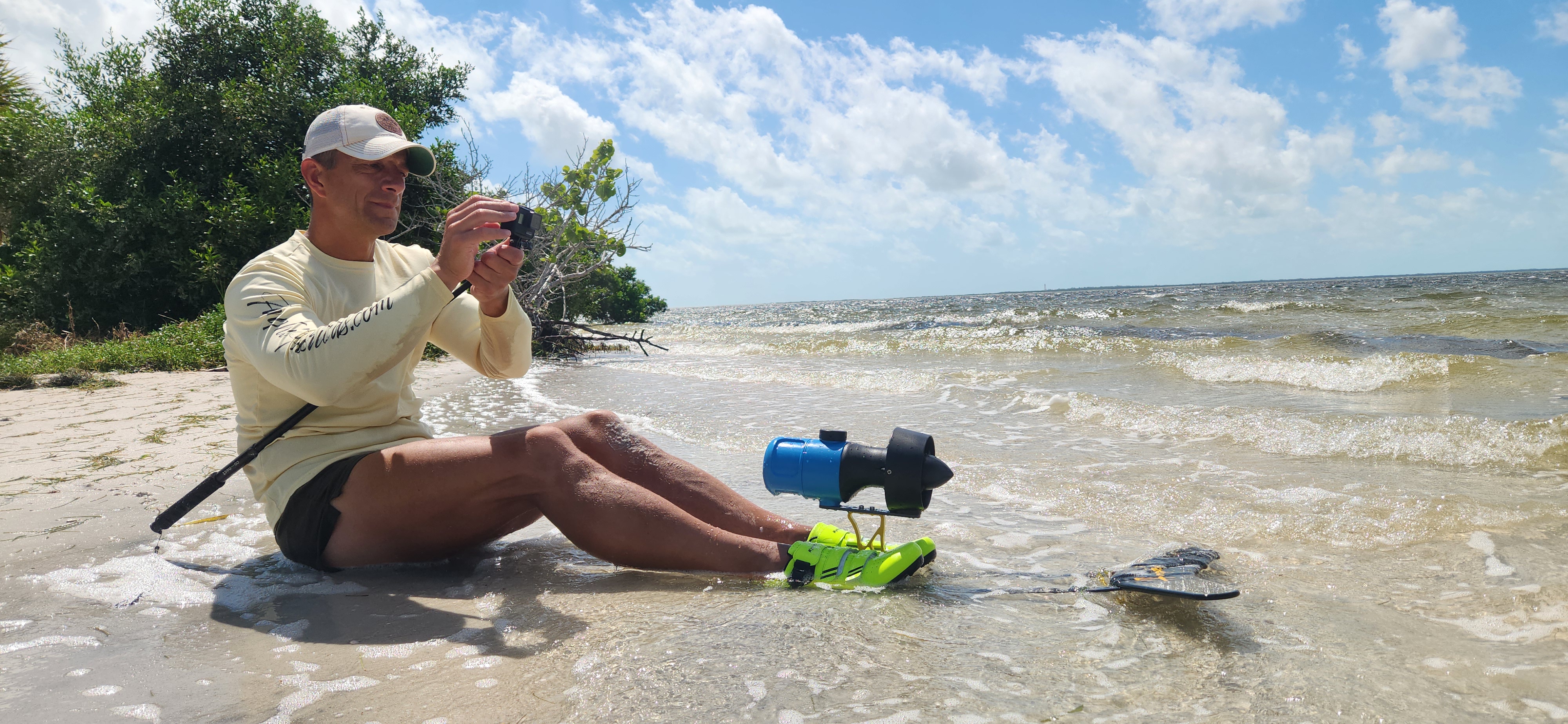
Amphi Americas LLC is seeking funding opportunities for their revolutionary underwater exploration device called the Amphi.  Spend more time under water with less effort.  Amphi is like an electric bike – you move with minimal physical effort.  Become free of our human limitations, free to move in the water as if you were one of the sea creatures.  No controls, hands free, oxygen saving cruising in the water.  Are you in?

Seeking investment funding opportunities.  Contact Ginger Kuczowicz, CEO / Managing Director at gingerk@amphiamericas.com

YouTube video:  https://youtu.be/IduWAOVZXuc?si=-9SBlD_pGI_CuXKz

YouTube:  https://youtube.com/@amphi7967?si=55lM7oaErvugPWiP

Website: https://www.amphiamericas.com

Facebook:  www.facebook.com/AmphiBionicSwimming

Instagram: https://www.instagram.com/amphiamericas

TikTok: https://www.tiktok.com/@amphiamericas 


Posted in Press Release | Leave a comment

Industry Profile – Bill Acker

bill-acker-in-gear-with-boatDive Industry Profile Series
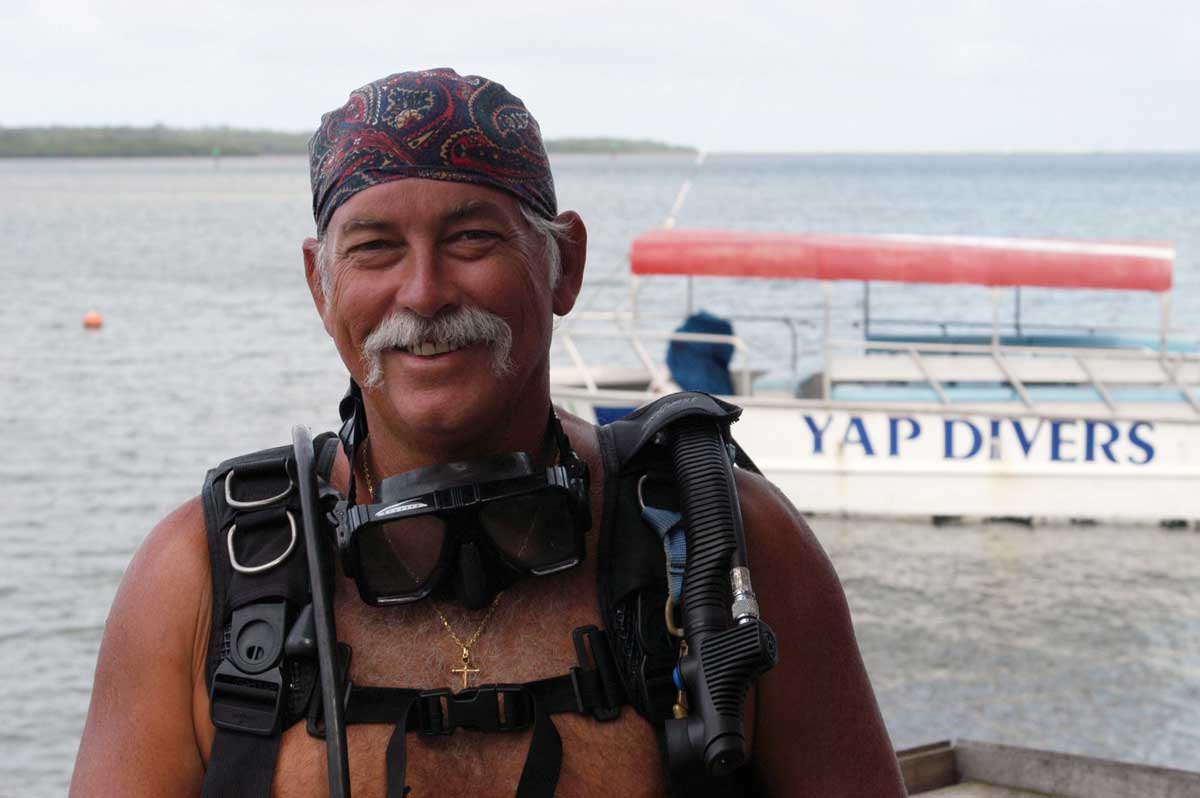
Bill Acker – Manta Ray Bay Hotel & Yap Divers
In the Words of Bill Acker
with Gene Muchanski, Editor
The Dive Industry Professional

If there is one thing that diving pioneers have in common is that they are all living the dream.  Some diving pioneers get to where they got by following a Dream.  Others discovered their passion in life by finding their dream.  Then there are the diving pioneers we all love in the diving community who create their dreams.  Bill Acker, of Manta Ray Bay Resort and Yap Divers, from Yap, Micronesia is one of those people.  When we looked closer at Bill’s history, we see that he is actually a combination of all three types of diving pioneer, and then some.  Bill followed a dream.  He found a dream.  He built his dream.  And now he is sharing his dream with the world.  Bill Acker is what we call a Dream Maker.

Born on November 19, 1952 in Austin, Texas, Bill Acker’s oceanic adventure of a lifetime began at the age of 26 when he joined the Peace Corps in 1976.  “I went to Yap as a Peace Corps Volunteer in 1976 and was an avid snorkeler.  I LOVED the ocean and the beauty of the reef and marine life.  One day, I was snorkeling while a Yapese friend of mine (one of the first 3 Yapese to be certified and the eventual two-term Governor of Yap) was diving.  I became very jealous that he could go down to the bottom and sit there while I was going up and down for what seemed like the entire day.  This ability to join nature up close and personal and be in a place where man was not made to be, really intrigued me.  When the Australian Navy helped make it a reality, it made it easy for me years later.  I’ve never regretted jumping at the chance to learn the sport…in fact you could say I’m Aussie certified.”

Bill Acker went to work for WA’AB Transportation in 1977 and started diving.  “We had an oxygen and acetylene plant on the dock that I managed as the Port Manger of Yap.  There was a group of Navy Divers onboard an Australian Navy ship that stopped in Yap one day.  We got a question about filling SCUBA tanks from the divers after seeing our compressor for the O2 plant.  When I told them we didn’t know about this, they said they’d set it up for us.”

“The port also had a tugboat and barge to dredge sand, so I thought it would be good for comradery among the staff to certify as many of them that wanted to learn.  I got in touch with Pete Peterson, the owner of Micronesian Diver’s Association (MDA), who sent three instructors to Yap so 45 of us took dive classes and got certified.  This included my wife.”  So, Bill Acker gets certified in Yap in 1985 and his dream gets better and better.

“After we became divers, I decided we’d take the tugboat out on weekends to spearfish, barbecue, and drink beer.  That was the mid-80’s, and nobody knew better than to spear fish on SCUBA.  Sometimes, after doing this a few times, we’d get stray tourists who happened to come to Yap after a dive trip to Palau.  We always said yes to their requests to go diving when they heard we were diving.  I had the bright idea that if we used my motorboat and opened a dive shop, we could charge tourists for diving and that would pay for our beer.  It’s true, Yap Divers was started for beer money.”  That was in 1986.

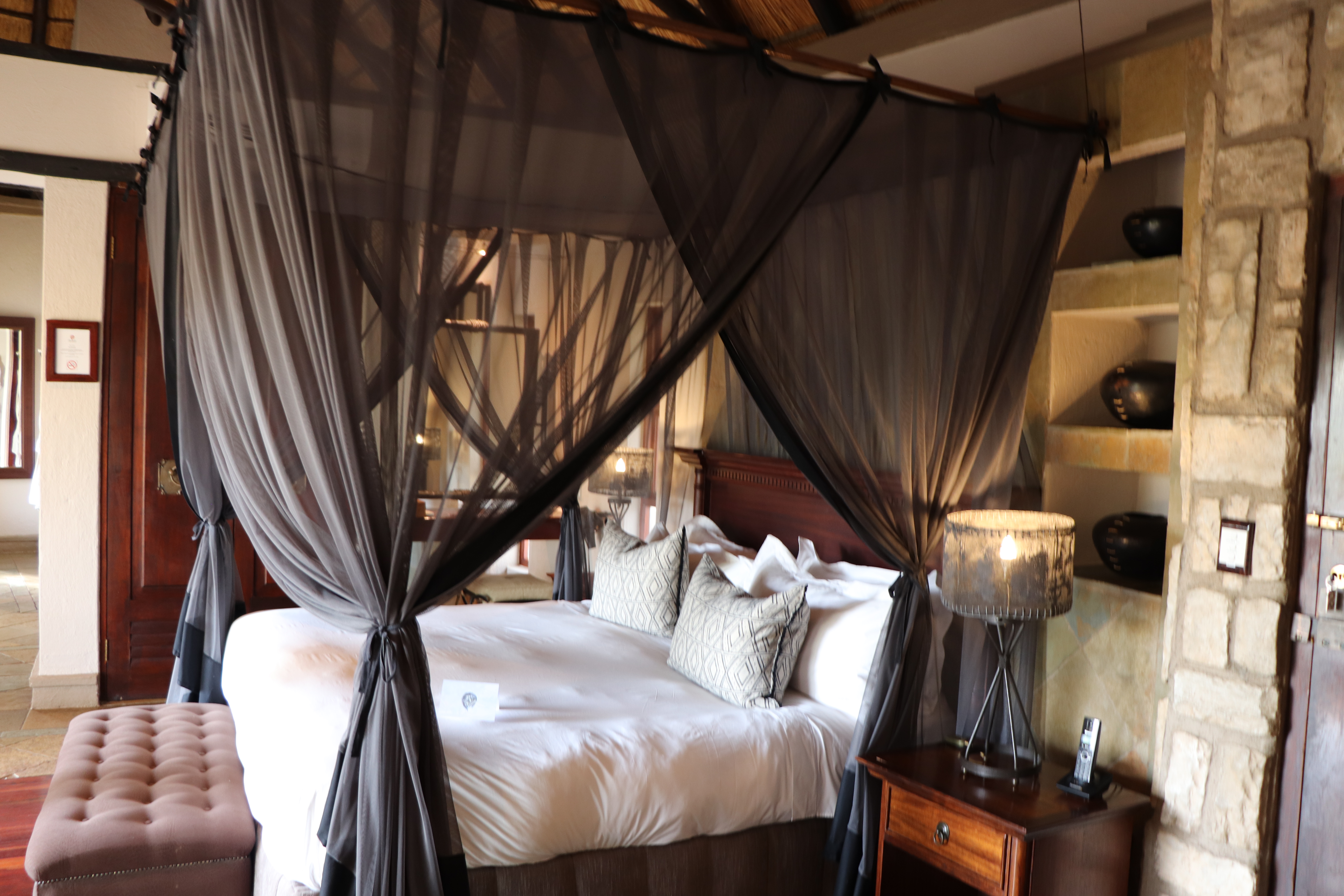
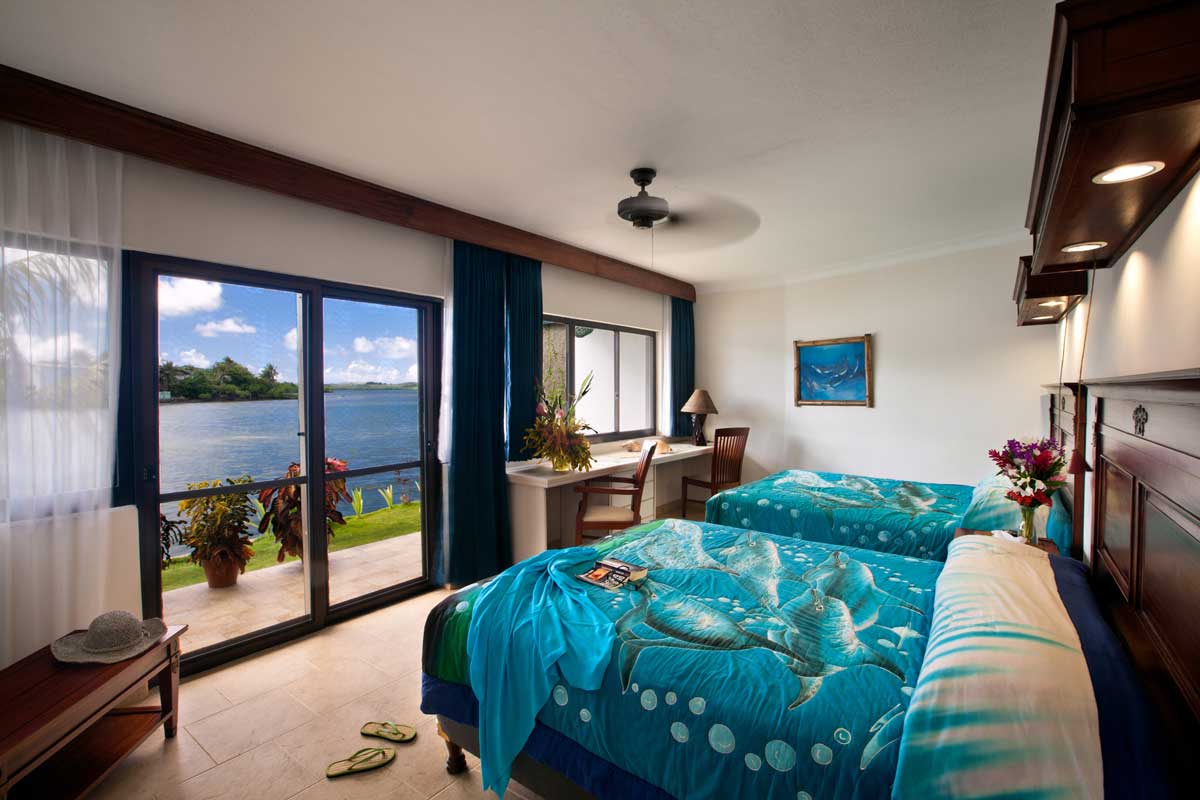
Yap BedroomIt didn’t take Bill long to upgrade his professional diving status.  He became a PADI Instructor in 1988.  I wish I had known Bill then.  I visited Yap briefly on my way to a three-week U.S. Navy salvage project in Palau but we never hooked up.  It’s strange how many times Dive Industry Professionals seem to pass by each other, like ships in the night over the years and never connect.  Two years later on March 1, 1990, Bill opened the Manta Ray Bay Hotel.  By this time Bill had become the General Manager of WA’AB Transportation.  It was time to take his dream to the next level.   “In July of 1991, I left WA’AB and purchased Yap Divers and the Manta Ray Bay Hotel from the company.  Since then we have opened Yap Planet Blue Kayak Company, Yap Anglers catch and release fishing company, the Taro Leaf Spa, a hydroponics garden and the Stone Money Brewing Company which brews world-class beer.” 

We asked Bill what his favorite diving specialty was and of course he said, “Manta Rays.  I am eternally biased as I believe the diving in Yap compares very well with any place I have ever dived.  My favorite dive spot in Yap is Yap Caverns on the Southern tip of the island.  There is everything there including very clear water, swim throughs, walls, shark cleaning station, macro critters, schools of fish and it’s never boring.” 

Jacques Cousteau and Lloyd Bridges may be Bill Acker’s most favorite diving people but, “The late Hall of Famer, Mr. Paul Tzimoulis was my mentor in all things diving.  Paul knew more about dive travel than the rest of the industry combined and to my great joy and benefit, he took a liking to me, my family, and Yap.  The rest is history.” 

You might wonder what type of an inner circle of influence does a diving pioneer have?  My question would be more like, who influences whom?  Bill Acker’s list of favorite diving people he has dived with is, “Way too many to name.  I have been extremely fortunate to have dived with lots of great people.  Paul Tzimoulis and his wife Geri Murphy would certainly be included in any list.  My wife and 4 kids have done hundreds, if not a thousand dives with me, and then there is Tim Rock, David Fleetham, Steve Miller, Marty Snyderman, Ray Bullion, Stefan Michi & Steven Lamphear from Mares, Frank Schnieder, Andreas Schumacher, Amos Nachoum to name a few but there are lots more.  Some famous and some just good people.  Diving is my passion and I love diving with different people.”

And people love diving with Bill Acker and Yap Divers.  Bill was inducted as an SSI Platinum Pro in their first selection class and is a 2014 member of the International SCUBA Diving Hall of Fame.  Manta Ray Bay Resort and Yap Divers has received numerous awards from Scuba Diving Magazine over the years for Readers’ Choice, Top 10 Destinations for Big Animals, Top 10 Value Dive Destinations, Top 10 World’s Best Marine Life, Top 10 Best Place for Phot Ops, and Top 10 World’s Best Place for Small Animals.

But what good is being a successful Diving Pioneer and Industry Leader if you are not giving back to the Global Diving Community that has given you so much success, enjoyment, and fulfillment?  Bill has our respect when it comes to Phillanthropy.  “I do not have a particular NGO that I would call my “favorite”, but I have contributed in one way or another to various NGO’s that have reached out for my expertise or assistance.  I help organizations that I believe are there to better the planet and its Inhabitants. 

Philanthropy holds a different meaning to me than I am sure some people.  I have lived most of my adult life in an island nation where the core belief is that one’s actions must be for the good of all.  So, although my family and I have a business, we have not only done it to benefit ourselves, but have done so to help our island communities.  Since being in business, we have been involved in summer training of Yap’s youth, offered opportunities for locals to network with visitors and contributing to anything that will help my island home in improving the standard of living of its citizens.”

Bill Acker is still as active as a Dive Industry Professional can get.  “I have dived Yap, Chuuk, Palau, Kosrae, Majuro, all over the Philippines, Bali, and Raja Ampat and I have discovered and named over 50 sites in Yap.  I have over 18,300 dives and still love it.”   Bill is thankful for the good work that is done by divers in the global diving community.  “I love the work we do every day throughout the world in protecting our oceans.”    Manta Ray Bay Resort and Yap Divers are Members of the Dive Industry Association (# 0433).

manta-fest-genericSince 2006, Bill Acker and Manta Ray Bay Resort and Yap divers have produced the Annual MantaFest Photography School & Contest.  “Our MantaFest program has brought underwater photographers, both amateur and professional, to this small island and its protected reef to compete for prizes, attend workshops, take tours of the island, and experience the unique culture of Yap, which is considered to be among the best preserved in the Pacific region.”  The 17th annual program is scheduled for August 24, 2024 – September 8, 2024. 

blackwaterfest-logo-full-color-cropped-966x1200A new edition to the annual MantaFest program is the 2nd Annual BlackwaterFest 2024 Photography School.  Unique to the Underwater Photography circuit is an opportunity to photograph Mantas by day and Blackwater by night.  “Each night, we’ll explore the water over the deepest part of the Pacific Ocean, the “Yap Trench”, that reaches depths of over 9,000 meters.  Discover exotic creatures of the deep blue sea that are rarely seen and experience their sighting in their natural habit.  This exceptional experience will change your outlook of the ocean’s wonders and will give you an up-close insight of her dark secrets.” 

Bill concluded our interview with these comments.  “I have been so very blessed throughout my life in all respects and this opportunity to be featured here in The Dive Industry Professional is a part of the blessing. I truly believe I have made a positive difference in the lives of many people, and I thank God daily for the blessings bestowed on my family and me and our business and co-workers.” 

For more information visit Manta Ray Bay Resort and Yap Divers or email Bill at bill@mantaray.com   

###

Posted in Uncategorized | Tagged , , , , | Leave a comment

Part 2: Buy Your Gear

DIVE LOCAL LOGODIVE LOCAL – A Community Effort
Building a Local Diving Community
Message to Local Divers
By Gene Muchanski, Executive Director,
Dive Industry Association, Inc.

Buy Your Gear – Get Outfitted to Get Started

The best way to build a thriving global diving community is to show people how they can become active scuba divers and enjoy the recreation for as long as they wish. 

Four Steps to Becoming an Active Scuba Diver:

  • Learn to Dive
  • Buy Your Gear
  • Go Diving
  • Stay Active

Buy Your Gear:  If you want to go scuba diving, you are going to need scuba diving equipment to do it.  Human beings were not meant to live underwater, but with the proper equipment we can visit the underwater realm for short periods of time.  Scuba diving equipment makes underwater exploration possible.  The primary goal of diving equipment is to keep divers safe.  Being safe in a potentially hazardous environment is what makes our short visits enjoyable.  Some long-time divers might even say enjoyable and productive.  Productive because with the proper diving equipment, divers can perform purposeful tasks underwater for work or pleasure.  Regardless of the reasons we take up scuba diving, the diving equipment we use should never be taken for granted.  Investing in your own diving equipment is an important decision to make and should never be taken lightly.  To put things in proper perspective, I like to think of diving equipment as life support equipment.  Yes, it is still in the sporting goods category, but its primary purpose is to support life underwater.  Maybe this will remind you how important the selection, care, and maintenance of your diving equipment really is.

Diving equipment can be purchased, rented, or borrowed.  I’ve never been a fan of borrowing dive gear from friends or family.  You may not know how old the gear is or when it was last serviced.  You may not know when the gear was used last and if it still is in proper working order.  Diving with unfamiliar gear that you have not been trained on or have any experience using may present problems.  Unless you are the same size as your friend, it may not fit you.  And if you are borrowing gear from a friend, what are they going to use?  A major reason is that the gear you borrow may not be the right kind of gear for the type of diving you will be doing.

Renting diving equipment from a Professional Diving Center is a viable option, but it has its limits.  The rental sources that are the best to rent from have top-of-the line equipment for rental and rotate their rental equipment on a frequent basis.  Their rental equipment should be well maintained, serviced on a regular basis, and documented.  The equipment you rent should be the type of gear that you were trained on or are familiar with.  The price of your rental package should be reasonable, and the rental process should be simple and convenient for your schedule.

When traveling to a dive destination away from home, renters have two options.  One would be to rent from their local dive center and be able to dive with equipment they are familiar with.  The other option is to rent your gear from the dive destination’s dive operator.  Without knowing much about the specifics of the destination’s rental department, this is a tough call to make.  Another factor that makes renting difficult is that not all pieces of diving equipment are offered for rent.  Specialty items such as dive computers and underwater lights are not always available.  Many dive destinations only offer tanks, regulators, BC’s, and maybe wetsuits for rent.  Renters need to do their research on their dive destination prior to the trip and reserve your gear as early as you can.

The good news is that dive destinations are working hard to improve their rental services for traveling divers.  It is a good idea to check with your local dive store, group Dive Travel Specialist, or your Dive Travel Wholesaler when renting gear on your dive trips.

Purchasing your own diving equipment makes a lot of sense if you are diving frequently enough to enjoy the benefits.  Equipment owners have the luxury of selecting the right type of equipment that is suited for the type of diving they intend to do.  They have control of the selection, care, and maintenance that is required for life support equipment.  The more they use their gear, the more comfortable they become with it.  They never have to worry about the availably of rental equipment and they save an enormous amount of time, money, and manpower by not having to go through the rental process every time they want to go diving.  Divers who make a financial investment in their own diving equipment have a tendency to use their equipment more often.  If you own your own equipment, you will look for more opportunities to use it.

The recreational diving industry has been divided on the subject of divers who decide to purchase their own equipment as opposed to divers who choose to rent.  There are good arguments on both sides of this debate.  To me, the major factor in making a decision about the purchasing of equipment is the reason a person decided to take scuba lessons to begin with.  If a student enrolls in a scuba diving course just to experience something new, they have only made a decision to “check it out.”  When I taught scuba in a university setting, I taught and certified hundreds of students who just wanted to give it a try.  Of course, those who really enjoyed their course and wanted to go diving more often, had the option to take it to the next level.  Becoming an active diver is really a series of decisions that result in the desire to have your own equipment.

As responsible Dive Industry Professionals we need to help our students choose the best options for them.  Not for us.  Granted, many dive instructors are motivated to teach as many people as possible, but to what end?  Are we doing it for the student, the industry, or for our own purposes?  Let’s leave it up to the student to tell us why they are taking diving lessons.  If it is to try something different for a one-time experience, an introductory to scuba class may be just the right thing for them.  Introductory Classes have little or no equipment purchases to make.  If a student enrolls in an openwater certification course, the initial investment in equipment may be minimal.  Most courses require the purchase of a mask, fins, snorkel, and booties.   If they are taking lessons to become an active scuba diver, then we can put them on the right path to make that happen too.  Identifying and understanding the needs of our students makes our job as Scuba Instructors and Diving Equipment Advisors much more professional.

Part of the Learning Process:  Learning about diving equipment should be a large part of the certification process.  We have to teach scuba students about the equipment in a classroom setting initially, and then teach them how to use the equipment in the water.  One of the main reasons we limit the sale of life support equipment to certified divers or students engaged in a scuba course under the supervision of a certified scuba diving instructor is because using diving equipment by an untrained individual can be potentially dangerous.  During a scuba diving course, students learn about the different pieces of equipment that make up a diving set, or kit.  They learn about the inner workings of the equipment and how it is used to keep the diver safe.  It is important to learn about any limitations a piece of equipment may have.  Does it have a time or depth limitation when in use?  Does it need to be recharged or filled periodically?  Learning about its normal or scheduled maintenance requirements is important for a student to know.  Educating a diving student about the function of diving equipment is important also.  I believe that the more a diver knows about what a piece of equipment can and cannot do will help them decide what type of equipment is best for them.

Learning How to Use Diving Equipment: Diving is an equipment intensive recreation.  A big part of a scuba course is learning how to use the equipment.  Most of the skills we perform in a scuba diving course are first conducted in confined water.  This type of environment is good for initial equipment training with mask, fins, snorkel, air delivery systems, and buoyancy systems.  In deeper water, students can get additional firsthand experience with wet and dry sits, weight belts, dive computers and underwater lights.  The more experience that a student diver can get with equipment while being supervised in confined water, the more comfortable they will be diving with that gear in the open water environment.  As a university scuba instructor, I have seen the positive results from repetitive skills training, using scuba equipment in an Olympic size swimming pool, during a semester-long scuba course.  Frequent practice in confined water builds confidence.

Raising the Bar for Professional Dive Equipment Advisors:  Regardless of how this was handled in the past, this is the 21st Century.  Dive Industry Professionals need to learn and stay current with their professional training agency standards and procedures.  As Scuba Instructors they need to be proficient at teaching diving theory and diving skills.  Diving equipment falls into both categories.  Training Agencies need to ensure that their Scuba Instructors are knowledgeable about the diving equipment that is currently on the market and commonly used by divers.  They must also verify that their instructors know how to teach a student to properly use the equipment they train with. For most of the 35 Training Agencies we deal with in the United States, a simple review of their Policies & Procedures will probably show they are all in compliance.  A review of their Instructor Training Course curriculum might be the first step in a comprehensive audit.  We will leave it up to the training experts at the agencies to figure out what their instructors need to know about equipment.

Going Beyond the Basics:  Diving equipment has significantly improved over the 57 years that I have been a certified diver.  My hope is that Training Agencies and Equipment Manufacturers have kept up with their educational programs to kept Instructors knowledgeable about the latest changes and developments.  There are many improvements in dive equipment education that we can make in the industry.  The diving equipment manufacturers have always conducted excellent maintenance and repair training programs for their Authorized Dealers.  As a dive store owner, I always took advantage of repair courses that were offered to me and my staff by the manufacturers.  Whenever a manufacturer allowed me to include any of my instructors in their repair course, I enrolled them.  I figured that the more an instructor knew about equipment, the better.

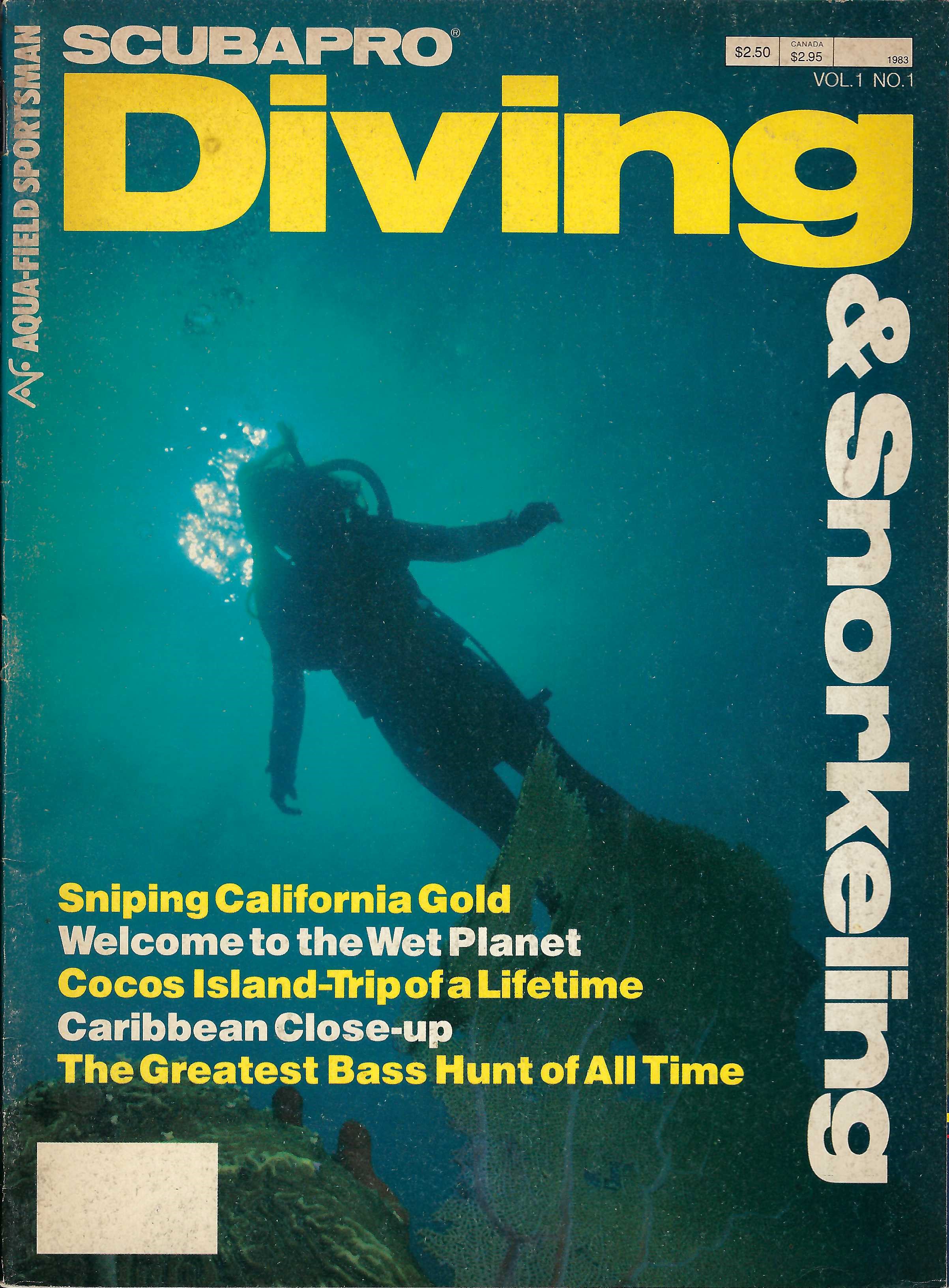
Scubapro Diving 1983I seem to remember that Scubapro formed a training organization to teach Dive Industry Professionals about diving equipment.  I believe it was called SEA – Scubapo Educational Association.   I’ll have to check my archives.  Anyway, the diving industry needs an organization like that again.  I believe there is a need for a four-part diving equipment training program, conducted by the diving equipment manufacturers.  The first part would be an introductory course that would teach the basic theory about diving equipment.  The second part would dive into more details about the features and benefits of individual pieces of equipment.  The third part would be a program to certify “Professional Diving Equipment Advisors.”  I believe this part could include sales training on topics that help identify diver equipment needs.  This part would be useful to Dive Industry Professionals who have a desire to become industry influencers.  The fourth part of this program would be about equipment maintenance and repair and lead to a certification as an Equipment Repair Specialist.

The Roll of the Scuba Instructor:  Every scuba instructor should have a basic understanding of how diving equipment works, to have any credibility in the classroom with their students.  That is a responsibility every Training Agency should take seriously.  How much an instructor needs to know about equipment, at a minimum, should be up to the Training Agencies.  When it comes to the confined and open water training portions of the scuba course, the instructor must know how to operate every piece of equipment used in the class.  There is no way an instructor can teach a student how to use gear they don’t know how to use themselves.  When a scuba instructor is ready to grow professionally into a Professional Equipment Advisor or Industry Influencer, there should be a path to help them advance in their career.

Becoming a Professional Equipment Advisor:  There is a plethora of diving equipment brands, makes, models, and configurations available on the market.  Choosing the right gear for the right purpose may seem like a monumental task for a new diver.  Using a Professional Equipment Advisor can take much of the confusion and guess work out of selecting and purchasing a complete diving outfit.  A Professional Equipment Advisor is a seasoned Diver who is familiar with an array of major brands in our industry.  They don’t necessarily have to be licensed as scuba instructors, but being one adds to their credibility.  It is our belief that diving equipment manufacturers should have a training program to educate Professional Equipment Advisors.  PEA’s would be valuable assets as sales advisors at dive stores, especially if the store’s scuba instructors did not have the time or desire to advise students on their diving equipment selections.   PEA’s would make excellent brand ambassadors for equipment manufacturing companies.  Being certified by a number of equipment manufacturers, PEA’s would gain the credibility they need to be successful bloggers and industry influencers.

Buy Your Gear – In Summary:  So, we see that buying your own diving equipment has many options.  It is not a one decision – fits all type of argument.  We can’t say that everyone needs to buy their own gear and we certainly don’t recommend the old way of instruction where we say that all diving equipment is evil, and we must learn how to escape to the surface in case all of our gear fails!  We train our instructors to teach professional scuba diving courses.  We provide Dive Equipment Specialists with the knowledge and skills training to become knowledgeable and proficient with all types of diving equipment.  We train and support Dive Equipment Advisors, Dive Equipment Repair Technicians, and Industry Influencers.  We have come a long way in our industry.  We follow professional industry standards that introduce people to diving, teach and certify people through an open water scuba course, and provide a path for certified divers to stay active in a great recreation.  That path is:  Learn to Dive – Buy Your Gear – Go Diving – Stay Active.

For more information on becoming a Member of our Global Diving Business Network, contact Gene Muchanski, Executive Director, Dive Industry Association, Inc., 2294 Botanica Circle, West Melbourne, FL.  Phone 321-914-3778. Email: gene@diveindustry.net  web: www.diveindustry.net

# # #

Posted in Uncategorized | Tagged , , , | Leave a comment

Editorial – July 2024

Gene 2023-4Industry vs Market
 by Gene Muchanski, Editor
The Dive Industry Professional

Have you spent the last decade or two carving out a nice niche market and creating an awesome circle of influence for the programs, products, and services that your company specializes in, only to see your market share slip through your hands because you don’t know how to diversify your portfolio?  I hope you are not one of those people who don’t know that a bird in the hand is worth two in the bush!

As we enter into the dog days of summer, at the beginning of hurricane season in the Caribbean, while we are preparing to exhibit at the DEMA Show, there is an awful lot of industry product planning going on that is bound to go sideways.  From our vantage point, we are seeing a lot of industry planners getting ready for the next upcoming buying season.  Many will be ready for the official launch of the 2025 season on September 1 while others will wait until November.  Waiting until November to make your pitch is the first mistake.

The second mistake we are noticing is as plain as day to dive industry Professional Business Advisors but apparently not to some companies in the diving industry.  We are starting to see a number of companies trying to diversify their product offering without taking into consideration what industry they are in and what we know about niche markets.  If I spelled out the red flags we see going up around them, you would immediately be able to recognize the companies who are making these critical errors.  Rather than offer them unsolicited advice, maybe we should just explain the difference between an industry and a market.

An industry is a group of like-minded companies that produce a similar program, product, or service.  Let’s call them products.  In the “diving industry” we recognize the predominate stakeholder groups (aka Industries) as Manufacturing (33), Wholesale Trade and Distribution (42), Retail Sporting Goods (45), Sports and Recreation Instruction (61), Travel Agencies and Tourism (56), and Organizations and Associations (81), to name a few.  The most successful companies in our industry produce products that are similar to what is produced in their industry but have chosen to specialize in products related to diving.  There are a few that are engaged in other industries, sometimes to the detriment of their own success.  The numbers in parentheses are the first 2-digits of their NAICS codes.

The word market has a few meanings for us.  A market could be a description for a pool of potential customers.  i.e. There is a large market for my product.  It can also refer to a group of buyers and sellers that engage in commerce for mutual benefit.  i.e. To be successful in the diving industry, you have to understand the composition of the market.  The words market and marketplace are often used interchangeably.  i.e. A market is a place where buyers and sellers meet to do business.   Professionally, I would rather use the word marketplace to describe a location.

When we talk about a niche market in the diving industry, we are actually targeting a group of customers who are looking for diving and diving-related products.  That is why the diving industry is really a niche market, not an industry.  We are a conglomerate of industries that produce diving and diving-related products and are in the marketplace to sell our products to people interested in what we produce.

For the past 70 years, there have been many businesses, from different industries, that have produced products specifically for diving and diving-related functions.  As successful producers and sellers of diving equipment they have acquired a large customer base of people who have become part of the diving niche market.  As long as there was a demand for diving and diving-related products, these specialty companies were able to stay in business by meeting the demand.  In recent years, two important changes have altered the marketing mix.  Increased competition from new product producing companies has decreased their market share and a decrease in the number of new divers in the market has decreased their sales.

Normally in a free market economy, a number of options would be on the table.  Marginal companies would leave the diving niche market in search of more profitable markets.  More established producers would fight to steal market share from their competitors.  More successful companies would attempt to stimulate the market to produce more divers, who in turn would purchase more products.  However, in this post pandemic, recovery economy, critical social and economic demographics have changed.  Maybe even permanently altered.  With the passing of the baby boom generation, the raw population numbers are down.  The younger generations are not as interested in scuba diving as the boomers were.  Annual certification numbers are down.  Younger divers are more interested in single experiences rather than committing to a lifestyle hobby.  The sale of complete diving outfits is down dramatically.  New divers are more likely to rent their gear when they dive, instead of purchasing it.  That is not an encouraging picture I’m painting here, and unfortunately, many Dive Industry Professionals agree with this bleak scenario.

It appears that we have come to a fork in the road in our industry.  And I know that Yogi Berra said, “When you come to a fork in the road, take it.”   But all kidding aside, whichever fork you decide to take, opportunities will open up on the other fork.  One option is to know your niche in the diving industry.  Are you going to continue to specialize in your niche products, and market them to your niche audience?  Can you increase your niche market and your market share in it?   Are you going to increase your level of specialization in the diving community and get better at everything you produce that is diving and diving-related?  Will you become the leader in your niche product category and niche market customer group?  If you decide to expand your product diversification, would you create new customers for your new products?   I certainly hope so.

Product diversification can be a good thing, but it can be a step in the wrong direction if you are not matching the right product with the right customer, based on your core competency abilities.  I am seeing some travel advisors in the diving industry starting to sell Cruises and African Safaris as part of their product offering.   They are dealing with new travel vendors they meet at travel industry shows and they are coming into contact with clientele from a totally difference demographic than the diving community.  Granted, Cruise Ships and African Safaris have significantly higher sales potential, but the increased competition and marketing challenges can also be significant.  The challenge to becoming successful would be not to dilute your sales potential to your active diver database while trying to sell a new product to an old database that may not be interested in the new product.  Of course, to me, a perfect crossover from a diving trip to a safari, would be to baby boom diving clients who have decreased their dive trips because of age and are looking for a vacation alternative.  Finding out which of your clients meet this situation could increase your sales and client retention.

When you understand your primary industry’s core competencies and you can properly match consumer niche products with the purchasing niche consumer, you can dominate your niche market.  When you try to grow your business by adding new products to your line without understanding how to and who to market your products to, it could be a recipe for disaster.

This is an exciting time to become part of the Global Diving Business Network.  For more information about global marketing opportunities, contact Gene Muchanski, Executive Director of the Dive Industry Association, 2294 Botanica Circle, West Melbourne, FL 32904.  Phone: 321-914-3778.  Email: gene@diveindustry.net  Web: www.diveindustry.net

# # #

Posted in Uncategorized | Tagged , | Leave a comment

Editorial – June 2024

Gene 2023-4Finding Your Niche in the Diving Industry
 by Gene Muchanski, Editor
The Dive Industry Professional

Last month we wrote about Creating a Dive Industry World View.  A world view is the way we see the world.  It’s our job as Dive Industry Planners to guide Dive Industry Professionals in creating a unified world view of the recreational diving industry, that a majority of individuals in the global diving community could agree with.  Having a unified world view helps us realize how the recreational diving industry works and what our part in the global diving community is.

Finding your niche in the diving industry is a key factor in the pursuit of your career.  As a Professional Business Advisor, I am often asked for advice on starting or building a career in the diving industry.  The question mostly comes from young people who recently became a certified scuba diver and are thinking about making it a career.  I can relate to that.  After I got certified at the young age of 15, scuba diving was all I wanted to do for the rest of my life.  I am very thankful that I had many mentors and advisors along the way to help me through the decision-making processes.  I have been advising and consulting divers and entrepreneurs alike on the various options available to them in our industry, for over 40 years now.

First of all, it is a blessing and not a curse to get “bitten” by the scuba diving bug.  It is a fascinating recreation that has many benefits and can open doors to numerous opportunities and adventures.  My first piece of advice for enthusiastic divers is to think of scuba diving as a hobby or a profession.  We do the global diving community a disservice when we try to convince all certified divers to take the professional career path.  Enjoying a particular recreation as a hobby and making a living are two different life-changing decisions that each and every one of us needs to make privately and separately.

The Recreational Diving Industry is made up of two distinct communities.  The active diver community is referred to as the Global Diving Community.  This international community is comprised of people who are divers. I don’t want to limit it to only certified scuba divers.  Individuals could be snorkelers, free divers, spearfishermen, scuba divers, technical divers, mermaids, etc.  The community that supports divers and produces the programs, products, and services that divers purchase, is the Global Diving Business Network.  Members of this network are engaged, part-time or full-time, in the diving equipment, training, travel, and lifestyle product stakeholder groups.  For them, it is a business.  They get paid for their products and services.

Enjoy Scuba Diving as a Hobby:  The first option a newly certified diver can make is to pursue scuba diving as a hobby.  The definition of a hobby is something you pursue for personal satisfaction.  There are so many things a scuba diver can experience as part of the global diving community.  Scuba diving can become a hobby in itself and lead to the pursuit of specialty interests such as wreck diving, cave diving, or technical diving.  It can be the gateway to other hobbies such as underwater photography, environmental conservation, and others.  The possibilities for diving related adventures using scuba diving equipment are endless.  Our association has created a message to the active diving community, using our website www.divelocal.org.  The message is: 1) Learn to Dive.  2) Buy Your Gear.  3) Go Diving.  4) Stay Active.  We are working to grow and maintain an active global diving community.

Turn Your Hobby into a Profession:  A second option for a certified diver is to turn what you do for fun into a business.  Our definition of a business is something you do for compensation.  An easy way to explain the difference between a hobby and a business is my by cooking example.  If you enjoy cooking and you eat what you create, it’s a hobby.  It’s OK if you share your cuisine creations with your family and friends, as long as you don’t get paid for it.  If you cook for other people and you sell what you prepare, it’s a business.

There are many diving and diving-related skills that are in demand in our industry.  For those who are interested in an employment situation, there are many full-time and part-time jobs available in the industry.  If you are thinking about starting your own business in the diving industry, the opportunity always exists for the well qualified and well-funded entrepreneur.  If you are thinking about working in the diving industry, a Professional Business Advisor at the Dive Industry Association can help you get started with your employment opportunity research.

If you have decided to go the business route in the recreational diving industry, your first decision should be whether you are looking for a full-time opportunity or a part-time commitment.  That kind of narrows things down a lot.  Most Dive Industry Professionals I’ve known in the industry, who are looking for a part-time business opportunity have already decided what part of the industry they are interested in.   Young divers searching for something in the industry are more open to employment opportunities across the board, whether it be in a part-time or full-time situation.  Conducting industry research may be a good place to start.

As a Professional Business Advisor, the most important piece of advice I can give to anyone is to find their own personal niche within the industry.  I always ask a prospective client; What gives you the most personal satisfaction in a working situation?  Do you have the necessary talents, skills, education, and experience to perform in that capacity?  Would you be happy to perform your skills for 8 hours a day if it were full-time or even a few hours a week if it were part-time?  Is there any room for growth in your particular niche?

Finding your niche within the industry may be an important first step but staying on course soon becomes the next priority.  We all have known people who got into the diving industry because of a certain reason, but soon lost their way and got distracted from their original calling.  Maybe it was the job or maybe it’s just life.  For that reason, we all have to remain focused on what is important to us in our career.  Maybe an annual checkup is what we need?  Are we still doing what we originally wanted?  Are we remaining true to our niche market or niche profession?  Have we grown in our purpose, or have we lost our way?

In the military we call it “Mission Creep.”  That is where you start to do something for a specific reason and the mission grows in nature and scope, until you realize that you have far exceeded your original intent.  How many Dive Industry Professionals loved diving so much they became an instructor?  Then a Course Director, then a Retail Store Owner, then a Dive Travel Specialist.  And now they want to be a Dive Travel Wholesaler?  My question to you is, have you grown, or have you spread yourself too thin and lost your way?  If you’ve grown in your career, that is good news.  But if you find yourself out of your niche, maybe it’s time to reboot.

This is an exciting time to become part of the Global Diving Business Network.  For more information about global marketing opportunities, contact Gene Muchanski, Executive Director of the Dive Industry Association, 2294 Botanica Circle, West Melbourne, FL 32904.  Phone: 321-914-3778.  Email: gene@diveindustry.net  Web: www.diveindustry.net

# # #

Posted in Uncategorized | Tagged , , , , | Leave a comment

Creating Your Own Supply Support Network

Network coverDive Industry Network Series
Create Your Own Support Network
By Gene Muchanski, Executive Director,
Dive Industry Association, Inc.

 In February 2024 we introduced an article entitled Create Your Own Circle of Influence.  In the article we explained how important this skill is to grow your business in the recreational diving industry.  As you become more experienced and successful as a Dive Industry Professional, more people will look to you for advice and leadership in all aspects of the diving industry.  To grow from that point on, you will need to expand your circle of influence to include vendors and suppliers who produce the programs, products, and services you have influence with.  Creating your own network of vendors and suppliers will help you grow as a Dive Industry Business Professional and increase your level of influence in the Global Diving Community.

Creating a network of Dive Industry Professionals that you know and respect can increase the quality and quantity of advice and expertise you can share with divers across the globe.  The secret ingredient is to start networking with the people and vendors you do business with in your supply chain.  This strategy is not restricted to diving influencers only.  It applies to all Dive Industry Professionals and diving businesses from all stakeholder groups in the industry.  Networking within your supply chain works because all the players in your supply chain have a vested interest in working together.  Another advantage of working within a network is that your customers feel more comfortable doing business with a team of people that are catering to their needs, instead of just one single person or business.

DSC_0236

Divi Flamingo Beach Resort Bonaire – Light & Motion Repair Technicians.

An Example of How Networking Works:  A few years back I was planning a trip to Bonaire and decided to take my underwater video equipment which included a Light & Motion housing.  Packed in my Save A Dive Kit were basic tools and extra O-rings for normal maintenance, but nothing beyond that.  During our trip I had a problem with changing a dome lens on the housing but was delighted to find out that Divi Flamingo Bonaire just happened to have two Light & Motion technical repair people on board. What seemed impossible for me to fix took these techs about 10 minutes to correct and I was good to go.  They saved my dives and my vacation.  Thank You.  It made me think about how important an integrated support system is to divers who are traveling far away from home.  I looked back on some of the support networks I had been a part of in my diving career, and I realized that having a support network is something that needs to be planned, executed, and maintained over time.  It is not something that happens automatically and it takes a certain degree of commitment and strategic planning to create.

When Dive Industry Professionals first start diving away from home, they are faced with a number of dive planning scenarios.  Their level of planning and preparedness will depend on whether they are traveling by themselves, with a buddy, or with a group.  It will also depend on whether they are a casual traveling diver or if they are the person in charge of the group.  A big factor in adventure travel planning is the distance away from home and the remoteness of the diving destination.  A factor that many new divers fail to take into consideration is the amount of equipment supply support that is available at their destination.  To the detriment of the Global Diving Community, many dive equipment manufacturers, dive resorts, dive operators, and dive travel specialists still have not addressed this issue.

Some dive planning scenarios call for self sufficiency with an expectancy that little to no supply support will be available on the trip.  Other strategies call for working with destinations where equipment and maintenance services are more readily available.  This article will focus on the benefits of building a supply support network for your company, your brand, your dealers, and their customers. 

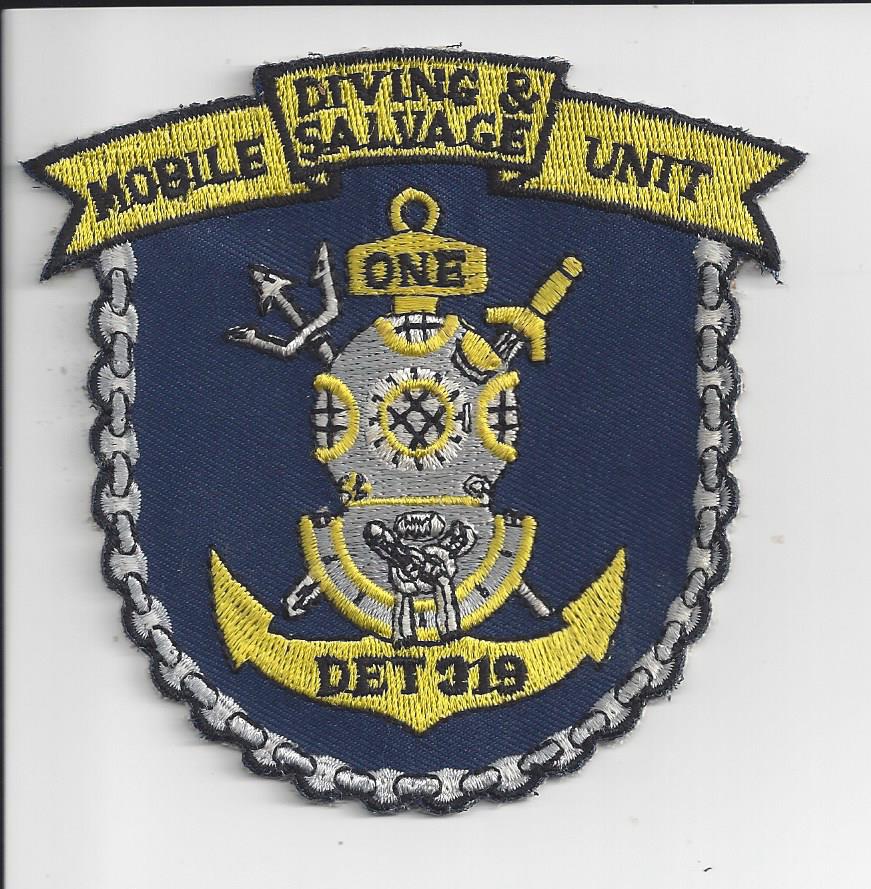
MDSU1 DET319As a Navy Diving Supervisor traveling around the South Pacific with U.S. Navy Mobile Diving and Salvage Unit One, I learned how to pack our dive gear and fly-away boxes for any and all possible contingencies when traveling to isolated island locations.  On a mission to Palau we loaded 12 sea-land containers filled with dive gear, gas compressors, a hyperbaric chamber, small boats, engines, tools, and spare parts.  Even with all that gear we had to plan for contingencies and prepare for using emergency repair facilities that were closest to our operation, should we have the need.  Having a support network is one thing.  Knowing where it is and how to access it is another.

Over the past 57 years as an active diver and instructor, I have seen good and bad examples of companies who created, tried to create, or failed to create functioning supply support networks.  In my opinion, two dive companies in particular (individuals actually) did an outstanding job in building an integrated supply support network.   The participants in these networks were more like Team Players than independent diving professionals.

In the 1970’s Fred Calhoun was the NAUI Branch Manager in the Northeast Territory of the United States.  Fred created a network of Instructors and dive businesses that included Instructors, Course Directors, Dive Stores, Dive Boat Operators, and even Dive Equipment Manufacturers who had a NAUI connection.  I would venture to say that Fred Calhoun was the major diving influencer in New England at the time and was able to capture and maintain the dominant market share for the company he and his team represented.  I credit Fred’s success to the fact that he actively built, maintained, and controlled an integrated supply support network for the Local Dive Community and the industry he worked in.

A second supply support network that I admire most was the one created by Dick Bonin from Scubapro.  Dick may have learned his networking strategies as a Navy Lieutenant and Team Member of the U.S. Navy’s Underwater Demolition Team.  When I was a Scubapro Dealer in the 1980’s I experienced an integrated, unified approach to dealer supply support.  It started with Scubapro’s manufacturing, shipping, and repair facility in Compton.  Everything under one roof.  They had an organized and select Dealer Network.  Their Sales Reps were in constant touch with their Regional Dealer Networks.  It was very common in the day to attend regional and national meetings with your Scubapro Team, whether it was at a regional dive show, national trade show, at the Scubapro factory, or on a local dive boat with the Scubapro Dive Team.  Remember the steak sandwiches at the Scubapro Repair Seminar luncheons?  Those were the days!

So, a lot has changed in the last 30 years.  The branches are gone and so are the Branch Managers.  With many companies, even the Regional Managers are a thing of the past.  Dive equipment companies are entering the U.S. market and yet they don’t have a warehouse or maintenance and warranty repair facility in the states.  There are fewer Dealer Networks and certainly none that operate as a Team.  When Retail Dealers are traveling the Caribbean, they are looking in vain to find dive resorts and dive operators with the same certification agency, the same equipment vendor, and any maintenance and repair support for the gear they are using.  But don’t worry.  Creating your own network can help your business flourish.

Growing our businesses in a controlled manner should be our underlining strategy.  I could speak volumes on the advantages of controlled growth, as opposed to uncontrolled growth.    Business growth is only good if it is planned for and monitored during the growth phase.   Profitable growth that builds the entire company is what we are looking for in the long run.  Uncontrolled growth can lead to higher expenses, lower profits per sale, and missed opportunities and sales in other aspects of our company.  Let’s look at a few ways that we can grow our market share and profitability by using an integrated supply support network.

Using the NAUI example above, the recreational diving industry performs more efficiently when local diving communities are managed by regional managers.  The branch system has worked in the past and there was a reason for that.  Local businesses have local needs that only local support can provide.  Local support is best provided by local managers. If the diving industry does not succeed on a local basis, it is a mote point to think about an integrated support network.  There won’t be any businesses to support.  However, if your company succeeds in their local diving community, then they will need a supply support network when they travel outside of their local community.

In the example about Scubapro, I explained how successful Dick Bonin’s strategy was in the United States.  Well, how about developing that same strategy in the Caribbean?  Around the world?  In all fairness to Scubapro, dive travel was not a big thing in the 1980’s.  It is now.  If I was still a Scubapro Dealer I would want to see Scubapro rental equipment at the dive resorts I took my groups to.  I would want to see Scubapro Repair Technicians on staff with the dive operators and I would expect to see a good selection of repair parts and tools on hand.  Should any of my group lose or break a piece of equipment, I would hope the dive resort or the dive operator would have at least a small selection of Scubapro equipment for sale.  In other words, I would want my dive resorts and my dive operators to be on the Scubapro Dealer Network with me.

Creating a supply support network is important to the traveling Dive Industry Professional because they want support for the programs, products, and services they use.  However, it is only important for the equipment manufacturers, dive resorts, liveaboards, dive operators and destination Instructors if they get bookings, referrals, and business from the traveling divers who want on-site support.  Why would a dive business bring on Scubapro Repair Reps, Scubapro rental equipment, and Scubapro merchandise if you never get any Scubapro Dealer business or referrals?  To be clear, a supply support network is a two-way process.  It has to be beneficial to both parties.

Building your own network makes your job as a Dive Industry Professional easier.  I know it is a difficult thing to do by yourself.  I also realize that it is really the job of the Equipment Manufacturers and Training Agencies to build their Networks so that more Dive Industry Professionals “speak their language.”  But until your vendors build a supply support network for you, you can start by contacting the dive resorts and dive operators you do business with and ask them about their certification agency affiliations and about the dive equipment they rent, sell, and repair.  You may be the reason your resort or dive operator finally adds an equipment line or another certification agency.

As a Marketing Professional I would start by asking the people you currently do business with, if they are capable of supporting the lines you carry.  If they do, they are in your network and you have a home.  If they don’t currently support your lines, you can remind them that the issue is important to you and ask them to consider it.  You can also contact your vendors and ask them to reach out to the resorts and dive operators on your behalf.  You all have something to gain by working with each other.

For more information on future developing  your own supply support network, contact Gene Muchanski, Executive Director, Dive Industry Association, Inc., 2294 Botanica Circle, West Melbourne, FL.  Phone 321-914-3778. Email: gene@diveindustry.net  web: www.diveindustry.net

# # #
Posted in Uncategorized | Tagged , , , , | Leave a comment

Dive Industry Message to Local Divers

DIVE LOCAL LOGODIVE LOCAL – A Community Effort
Building a Local Diving Community
Message to the Local Divers
By Gene Muchanski, Executive Director,
Dive Industry Association, Inc.

Introduction to Section II

Our purpose for being in business as a Marketing and Trade Association is to Build a Better Diving Industry, One Member at a Time.  Our Mission is to bring buyers & sellers together for mutual benefit, but to accomplish our mission we first had to lay a foundation for how the business of diving operates in our industry.  The heartbeat of the Global Diving Community lies in the creation and maintenance of Local Diving Communities across the globe.  The four pillars of each Local Diving Community that create and maintain the market we serve were discussed in articles published by The Dive Industry Professional. 

The Four Pillars of The Local Diving Community:

  • Dive Stores
  • Dive Instructors
  • Dive Boats
  • Dive Clubs

Our Message to The Local Diving Community:  Our second series of articles will be about the message we are creating to attract new divers and maintain the current population of certified divers.  It is our intent to do more than just create more certified divers.  Our mission is to show how scuba diving and diving related activities can become a lifetime recreation.  Our message to the general public is:  Learn to Dive – Buy Your Gear – Go Diving – Stay Active.  Here is an introduction to the articles we will be sharing with the industry over the next four months.

Our Message to The Local Diving Community:

  • Learn to Dive
  • Buy Your Gear
  • Go Diving
  • Stay Active

Learn to Dive:  To safely enjoy the underwater world with scuba diving equipment it is necessary to take scuba diving lessons from a certified Scuba Diving Instructor.  The lessons include classroom instruction, scuba training in confined water (usually a swimming pool), and scuba training dives in the open water environment (a river, lake, quarry, or ocean).  We will discuss the certification agencies that exist in the global diving community and the instructors who affiliate with these agencies.  Our article hopes to present all of the various options that are available to the non-diver in order to become scuba certified.

Besides educating the general public about the process of becoming certified, I believe it is important to explain why a person needs to become certified as a diver before they can purchase their gear and participate in the recreation.  We think it is important to prepare potential scuba students as to what will be required of them to participate and what educational outcomes they will have gained by completing a scuba diving certification course.  The Dive Industry Association is asking the Global Diving Business Network to assist us with information that will help us paint a clear picture of what potential scuba diving students can expect in a scuba course, and how to start the process of becoming certified.

Buy Your Gear:  You can’t go diving if you don’t have gear.  Of course you can buy it, rent it, or borrow it from a friend.  There are advantages and disadvantages to each of these and we will discuss that.  In the 57 years that I have been a certified diver, I have never known the diving industry to come to an agreement about what pieces of scuba diving equipment should be purchased as opposed to rented.  Another issue that has been discussed, debated, and argued about is when a scuba diver should purchase their own gear.  This article will cover as many of the options as it takes to help the newly enrolled or certified diver to make the purchasing decision that is best for them.

Go Diving:  It is fair to say that most of the people who take scuba diving lessons want to go diving.  Once a person becomes a certified diver, the world of possibilities opens up to them like they could never have imagined.  Our article will give the reader information about dive destinations worldwide.  We will show them where to dive, how to arrange their diving experience, how to get there, and what to do when they are there.  We will cover local diving, Caribbean diving, and exotic dive destinations.  We will explain resort destinations, dive resorts, dive operators, and liveaboard options.  I believe it is important to cover topics about individual dive trips, booking with a Dive Travel Wholesaler or a Dive Travel Specialist, and joining a group dive trip.

Stay Active:  It only takes a single scuba instructor to certify a new diver, but it takes an entire Local Diving Community to keep a scuba diver active.  After all, scuba diving is a social recreation. There are many ways to keep divers diving but it takes continual marketing efforts to help divers realize what their many options are.  I believe that our industry as a whole, has been myopically focused on certifying new divers and then abandoning them once they get their c-card.  Research tells us that divers who get certified and then stop diving have very little good to say about their training or about the recreation.  Rarely will they recommend scuba diving to their friends if they, themselves have dropped out.  The secret is to keep divers diving.

If you look at the four pillars of the local diving communities, you can see that each play a vital role in keeping divers active.  When a diver affiliates with their local dive store, they have continuing education, equipment purchases and rentals, local boat dives, group dive trips, and equipment maintenance services available to them.  Local diving instructors provide continuing education courses.  Dive boat operators are the champions of local diving.  Local diving is still the best way to keep divers active.  Dive clubs conduct meetings, seminars, workshops, group travel, and social activities.  We will cover all of those options in our article about staying active.

There are many other ways to stay active in diving and keep current with what is going on in the community.  We plan to discuss the advantages of going to local consumer dive shows and national trade shows.  We think that shows and events are the best way to charge you trade professional and certified diver batteries.  There are plenty of print magazines we will recommend that divers can subscribe to and of course, there are numerous digital magazines available online.  Many divers stay active by frequenting social media sites like Facebook, YouTube, and Pinterest.  We will explore social media as it applies to keeping divers active.

A great way to keep divers actively involved in the recreation is to show them how to develop hobbies or interests in subjects that could be performed in conjunction with diving.  We will explore becoming knowledgeable in photography, wreck diving, metal detecting, environmental work, non-profit volunteering, and numerous other activities.  Developing a hobby in a diving related activity is one sure way to remain active.  Diving historians and collectors of diving equipment or magazines acquire a historical perspective of the diving industry that can be shared with divers around the world through seminars, workshops, and published articles.  We will try to include all of those options as we explore ways to keep divers active.

By writing about our message to the local diving community we are doing something more than trying to grow and maintain the global diving community.  We are referring customers to the four pillars of the Local Diving Communities.  And who benefits from that besides the local dive stores, dive boats, dive clubs, and Instructors?  All of the producers of diving equipment, training, travel, and lifestyle products benefit.  We could not do our job of referring the programs, products, and services to divers who are needing them unless we maintained a current database of all the producers and sellers of these products.  Because of our continual research in the diving industry and the business relationships we have developed in the Global Diving Business Network, we are able to refer customers to the products and companies they need.

We will promote diving and diving related programs, products, and services and the dive businesses that produce and sell them, through our Weekly News press release service and our monthly trade magazine The Dive Industry Professional.  Our major referral source for active dive consumers is our Annual Trade Directory that is updated monthly.  Although our database of over 8,000 dive industry businesses is quite extensive and up-to-date, our ability to refer products and dive businesses is limited by our knowledge and experience with a select number of vendors.  Current members of the Dive Industry Association have a competitive advantage in our referral process because we can provide and promote current contact information and active hot links to their websites, stores, and ordering centers.  A big part of our series on our marketing message to consumers is going to be how they can reach the businesses that provide the programs, products, and services they need, want, and can afford.

We are inviting all 8,000 + dive businesses and Dive Industry Professionals to join our Global Diving Business Network to acquire new divers, retain customers, and serve the market that has been built over the years.  Your annual commitment to this cooperative marketing effort is only $125 per year, through your membership in the Dive Industry Association.  Our growth strategy for the industry has plans for expansion as we approach 1,000 members and again at 2,000 members.  We are looking forward to working with you today.

For more information on becoming a Member in our Global Diving Business Network, contact Gene Muchanski, Executive Director, Dive Industry Association, Inc., 2294 Botanica Circle, West Melbourne, FL.  Phone 321-914-3778. Email: gene@diveindustry.net  web: www.diveindustry.net

# # #

Posted in Uncategorized | Tagged , , , | Leave a comment

Editorial – May 2024

Gene 2023-4Creating a Dive Industry World View
 by Gene Muchanski, Editor
The Dive Industry Professional

I learned a long time ago that We don’t see things as they are – We see them as we are.   You might say that’s a little philosophically deep for a Dive Industry Professional to be writing about, but when you think about it, that statement explains why we have so many problems with marketing communications in our industry.  A world view is the way we see the world.  The way individuals see the world is based on a combination of their heredity, environment, education, and experience.  Every individual on the planet may see things a little differently, based on their individual uniqueness.  Based on the things that we see, feel, read, learn, and experience (our inputs), our world view is forever changing.  When our world view adapts, grows, or changes, the things we communicate (our outputs) change accordingly.

Creating a unified world view of the recreational diving industry is something the Global Diving Community would benefit from greatly.  Creating a unified world view is not a complicated or difficult undertaking.  It just requires an initial commitment and a daily focus on defining the recreational diving industry as it is and explaining how it functions.  It is important to recognize that we are not trying to change a person’s world view or the way they process information, but we can educate the Global Diving Community about the Global Diving Business Network and let individuals experience the diving industry for themselves.  With additional education and experience, divers and the general public will have a clearer understanding of the true dive industry world view.  Whether you and your business are included in their world view of the diving industry is up to you.

Currently in the recreational diving industry, we receive our information from countless individual sources. There is no shortage of data about the diving industry and the programs, products, and services that are sold by the dive equipment manufacturers, training agencies, travel companies and lifestyle product producers.   We continually get input from magazines and their advertisers, in both print and digital formats, from social media, internet communications, websites, emails, catalogs, and in-person at trade and consumer dive shows.  I don’t know how many companies are bombarding their customers with their monthly newsletters and daily email advertisements, but if your email in-box is anything like mine, it’s way too many.  As a Trade Association, we are on the mailing lists of hundreds of diving businesses.  Somehow, we learned how to penetrate their limited circle of influence and get on their mailing list.  With that said, we get way too many emails from a few.  We get a few emails from many.  Surprisingly enough, we never get any correspondence from the vast majority of diving businesses.  Most of the correspondence we receive is not educational or informative in nature.  It is usually correspondence with a request to buy something.  The critical flaw with this type of correspondence is that the messages are sent out to everyone on their list, with no regard to the receiver’s demographic or their need for the item offered for sale.  It is the classical shotgun approach, shooting at the flock, with the hope of hitting a single bird.  From a professional marketing standpoint, these companies are sending out requests for someone to buy their products, not knowing if the target audience has a need, want, or desire for their product.

The Dive Industry Association is in the business of bringing buyers and sellers together.  We are students of the industry, and we know how products flow from creation to consumption, through the supply and demand channels of distribution.  We have identified the sellers of diving and diving related programs, products, and services and we work with them to acquire, retain, and sell to qualified buyers.  We use an integrated marketing approach of working with Dive Industry Professionals in the supply and demand chains.  On a consulting basis we have worked with demand side businesses to attract and sell to key buyers.  As a public service to the industry, we created a Trade Directory for buyers and sellers.  As a public service to the 1,100 + Retail Dive Centers in the United States we have created and actively maintain a website directory of all active retail dive stores that can be accessed for free by the consuming public.  Our Dive Store Directory is published on www.divelocal.org  To make it easier for divers to find an active dive store in their vicinity, we divided the United States into 9 Territories.  The territories are NE, NC, NW, MA, SE, FL, SC, SW, SP.  Each territory is broken down by state.  Our association lists each dive store by their name, city, state, and website address.  If a dive store has a website listed, it has been verified by us in the past year.  Check it out to see if I am correct.  If a dive store does not have a website address, it will be researched and verified or deleted within the next 12 months.  Every year we verify all the dive stores in our directory, at a rate of one state per week, and we report it in our Weekly News press release service.  Incidentally, the dive store press releases are usually the most read releases in the Weekly News.  The dive store directories on each page are pretty good, but they are not perfect.  Dive stores go out of business all the time and new ones enter the market without telling us.  That’s why we need manufacturers, sales reps, training agencies and their reps, and dive stores to pitch in and help us with our research.  Our competitors read our weekly dive store reports all the time.  You would think they could help us with our research!

The current listing of dive stores on DIVE LOCAL’s website has brought customers and more business to local dive stores, at no cost to them.  It has also helped Dive Industry Professionals in other stakeholder groups to identify, and hopefully do business with dive stores that have been verified by us to be currently in business.  When we are finished with the program on dive stores, we will be able to expand it to included other stakeholder groups in the supply and demand chains.  We already have plans to initiate similar programs for the other 3 Pillars of the Local Diving Communities – Dive Boats, Dive Clubs, and Dive Instructors.

As a Trade Association we are documenting a Recreational Diving Industry World View as we see it.  Our world view is based on the industry’s collective research, education, and experience.  It is not “the world, according to one person.”  It may have started out that way, but as more people get involved with our research, the world view of the recreational diving industry becomes clearer for everyone.    Our ultimate goal is to create a unified Global Diving Community and supply them with the programs, products, and services they require. To do that we need to know the companies that are in the business of creating and supplying these types of products.  As a Marketing and Trade Association that is on mission to bring buyers and sellers together, that is what we specialize in.  For a minimal annual membership fee, our supply side members can be referred or introduced to qualified buyers that we identify and maintain a business relationship with.   Our magazine, The Dive Industry Professional, features business articles about the diving industry every month.  Our DIVE LOCAL Series covers how we support local diving businesses like Dive Stores, Dive Boats, Dive Clubs, and Dive Instructors.  The focus of our local and regional advertising is to show local divers how they can learn to dive, buy their gear, go diving, and stay active in the recreational diving community.  And that’s only the demand side of our industry economic development plan.  Wait until the diving industry learns what we have planned for the supply side of the industry.

This is an exciting time to become part of the Global Diving Business Network.  For more information about global marketing opportunities, contact Gene Muchanski, Executive Director of the Dive Industry Association, 2294 Botanica Circle, West Melbourne, FL 32904.  Phone: 321-914-3778.  Email: gene@diveindustry.net  Web: www.diveindustry.net

# # #

Posted in Uncategorized | Tagged , , , , | Leave a comment

FAM Trips For Travel Advisors

IMG_0589Dive Industry Network
SWAG Gift Bags for FAM Participants
By Gene Muchanski, Executive Director,
Dive Industry Association, Inc.

SWAG Gift Bags for Travel Advisors

A SWAG Gift Bag is a promotional item that is handed out to attendees at an event.  While they are considered a singular promotional item, swag gift bags are in fact a bag of multiple items that attendees genuinely appreciate.  The number of items in a swag gift bag depends on the number of sponsors that participate in the giveaway.  The promotional items included may differ depending on the type of event being conducted.  The items could be sample size products or full production sized.  They are given as a gift to attendees by event producers, to express appreciation for attending an event.

Swag Gift Bags are effective attention getters at shows and events because they start the program off on a positive note.  Think of it this way.  An attendee arrives an event, having spent considerable time, money, and manpower getting there.  They are greeted by the producers who present them with a gift, thanking them for attending.  If the swag gift bag contains items of value, it’s a double win for the attendee, producer, and sponsor.

Swag Gift Bags gets their name from the word sway, and not from the words to an acronym you might be thinking of.    By presenting attendees with a gift upon arrival, producers are trying to sway us, or persuade us to think of them favorably.  In the travel industry, swag gift bags are used extensively, because the producers of travel events are doing their best to get our business.  And it works.

As a Marketing Professional, I have seen the effective use of swag bags when dealing with buyers and sellers in a variety of industries.  Especially in the travel and hospitality industries.  I learned very early in my career that the sellers of programs, products, and services, are always looking for customers who need, want, can afford, and are willing to purchase what they sell.  I also realized that the person with the checkbook always has a competitive edge in a buyer–seller relationship.  I’ve made it my mission to bring buyers and sellers in the diving industry together for mutual benefit, by using innovative marketing ideas like swag gift bags and personal matchmaking referrals.

Swag Bag Use on FAM Trips:  Providing FAM trip attendees with a bag of useful product samples accomplishes a number of objectives for the event planner, the recipient, and the sponsor.

  • Trip Planners establish goodwill with attendees, resorts, and dive operations
  • Product samples may be useful on the trip
  • Vendors/Sponsors may receive new customers/dealers
  • Travel/Equipment Buyers may discover new products or vendors
  • Product samples may be tax deductible donations or a promotional expense

Who Receives Swag Bag:  Swag Gift Bags are given to qualified retail buyers on a FAM trip as a means to introduce them to new products.  On trips where dive stores are permitted to bring two attendees, each one should receive a bag of their own.  Trip Planners may get a little creative when couples are involved, if samples are different in color, size, or purpose.  It may also make a difference if the guests are divers or non-divers. The key is to be creative but remain inclusive.  I also found it appropriate to give a special swag gift bag to the Resort Manager and the Manager of the Diving Operation.  Preferably the ones who are in charge of product purchasing.

Popular Swag Bag Items:  Popular swag items on dive trips include reusable water bottles, environmentally safe sunscreen, insect repellent, lip balm, sunglasses, ball caps, rash guards and beach towels.  Specialty diving accessories make great gift items also, depending on their size, cost, and usage.

Typical Swag gift Bag Sponsors:  Any company with a vested interest in diving and dive travel can and should participate in swag gift bag promotions.  We’ve seen sponsorships from tourism boards, dive resorts, dive travel wholesalers, dive equipment manufacturers, non-profit organizations, and lifestyle product companies.

Benefits of Swag Gift Bag Promotion:   Right before the pandemic and shortly after, Roatan Charter and the Dive Industry Association worked together on two FAM Trips to Belize and the Turks & Caicos Islands.  We came up with the idea of presenting our participants with a swag gift bag at the beginning of each trip.  We did it for a number of reasons.  Primarily, dive travelers need certain items while on a dive trip in the Caribbean.  Essential items like sunscreen, insect repellent, sunglasses, ball caps, towels, and water bottles, are important items to bring for your safety and enjoyment.  We explained to our sponsors that we would be traveling with up to 35 qualified retail buyers for a weeklong trip to the Caribbean.  In addition, we would be spending quality time with the buyers from the Dive Resort and Dive Operation.  When you consider how expensive it is to hire sales representatives to cover the Caribbean, having a captive audience with us for a week seemed like a winning proposition to a number of sponsors.  Creating a SWAG Gift Bag for our FAM Trip participants was an enjoyable challenge for us, and our efforts were well received by our participants, as well as by the resort and dive operation managers.  All the sample products we distributed were used on location and contributed to an enjoyable event.  It may have even led to a few new dealers for the sponsors and a few new vendors for the dive store retailers.

More Than Just Travel Buyers:  When you think about what we are doing by conducting FAM trips, you see that we are in fact, bringing buyers and sellers together.  Normally you would think that a FAM trip is about introducing 35 travel buyers to 2 travel sellers:  the dive travel wholesaler and the dive resort.  But it is not just about travel buyers and sellers.  On a typical FAM Trip, we will be spending a week with as many as 35 qualified retail buyers of diving equipment, training, travel, and lifestyle products.  When you add the buyers from the resort’s gift shop and the dive operation, you have a five-day event in which to build relationships with almost 40 buyers.

Swag1 cropBelize FAM Trip:  Right before the pandemic, we had the opportunity to work with Roatan Charter on a FAM Trip to Belize.  Roatan Charter and Belize Dive Haven had scheduled a FAM Trip 2 weeks prior to their Grand Opening.  Our goal was to select up to 30 participants from our databases of high-volume group travel buyers for this inaugural FAM Trip.  While Debbie Helms from Roatan Charter was finalizing the details for the trip, we were putting out a request to the diving industry for FAM Trip sample products for our SWAG Gift Bags.  The response was better than we had anticipated. The following Vendors donated 30 sample products each.  Thank you all for your generous participation.

We ended up with 28 FAM participants.   We presented 28 SWAG Gift Bags at our arrival dinner at the resort, to qualified buyers from 14 Dive Stores, 1 Dive Travel Wholesaler, 1 Industry Media, and the Resort Owner and Dive Operations Manager.  All of the products we distributed got excellent usage on the trip.  The water bottles were refilled multiple times per day, and we carried them everywhere.

SWAG-C1Turks & Caicos Islands FAM Trip:  We had such a good experience with the gift bags in Belize, that we ran the program again on South Caicos Island, in the Turks & Caicos Islands.  We would like to thank DAN for the water bottles and Gold DAN Pins.  They went with us everywhere.  Thanks to Stream2Sea for the 3 Sample Pack of Sunscreen, Hand Sanitizer, and Mask Defog.  The perfect post-pandemic products.  Thank you to Lita’s All Natural for the Insect Repellent and Insect Bite Itch Relief.  You never know how much you need them until you need them.

  • DAN – Divers Alert Network – Reuseable Water Bottle DAN & DAN Pin
  • Lita’s All Natural – Insect Repellant & Insect Bite Itch Relief
  • Stream2Sea – 3 Piece Sampler Pack- Sunscreen, Essentials Hand Sanitizer, & Mask Defog

What We Learned:  The first thing I realized was that Debbie Helms from Roatan Charter is a Rock Star.   I always knew it, but these two trips showed us all why Roatan Charter is the best Dive Travel Wholesale Company in the Industry.  Debbie and her Staff are always open to new ideas, and they go out of their way to enhance their clients’ dive travel experience.  Our experience with the SWAG Gift Bags enabled us to form a closer bond with our Retail FAM Trip Participants and it led to a partnership with a number of dive equipment suppliers and manufacturers.  FAM Trip visits can double as an opportunity to present and demonstrate diving equipment and related products to qualified retail buyers who are participating in the FAM Trip, as well as to the equipment buyers at the dive resort, dive operation, and resort gift shop.

A Paradigm Shift in FAM Trips:  From a marketing perspective, I am always thinking about ways to increase the frequency, reach, and effectiveness of our marketing messages, increase market penetration and market share, maximize the flow of goods and services through our channels of distribution, and continually acquire, retain, and service my current customer base.  I sincerely believe that an integrated marketing strategy, like the one we are currently using, can make significant inroads in the Caribbean dive market.  I am looking forward to expanding our marketing influence in the Caribbean and beyond.

For more information on raising the professional bar in the Global Diving Business Network, contact Gene Muchanski, Executive Director, Dive Industry Association, Inc., 2294 Botanica Circle, West Melbourne, FL.  Phone 321-914-3778. Email: gene@diveindustry.net  web: www.diveindustry.net

# # #

Posted in Uncategorized | Tagged , , , , | Leave a comment

Editorial – April 2024

Gene 2023-4Success Is When A Plan Comes Together
 by Gene Muchanski, Editor
The Dive Industry Professional

Before I begin, I would like to wish the Dive Industry Association a Happy 23rd Year Anniversary.  It’s been a great journey so far, and I am honored to have had the privilege to work alongside so many outstanding Dive Industry Professionals in so many different shareholder groups and industries.  Thank you.  I am looking forward to continuing to serve the Global Diving Community and the Global Diving Business Network for many more years to come, in whatever capacity I am blessed to work in.

In our February 2024 Edition of The Dive Industry Professional, I wrote an article for our Dive Industry Network Series, entitled Create Your Own Circle of Influence.  That article prompted more responses and conversations from my fellow diving peers and colleagues in the diving industry than I have experienced in a very long time.  The article seemed to hit a hot button with Dive Industry Professionals who agreed that creating a strong circle of influence is one of the keys, if not the most important key, to unlocking your success potential in the diving industry.  I couldn’t agree more.

Network coverOne of my esteemed colleagues in the industry suggested that I should expand the topic into a full-length book.  He must have been reading my mind.  That is exactly what we have been planning to do for some time now.  If you have been reading our Newsletter, which is now a Magazine, for the past 23 years, you’ll know that most of our articles are actually chapters or sections of a bigger issue. Creating Your Own Circle of Influence is part of an expanded version of the original twelve chapters first published in the series, The Dive Industry Network.  The series focused on how Dive Industry Professionals could learn, participate, lead, and mentor important principles in the diving industry.  Maybe we will call the next series of articles, Section II.  In addition to creating a circle of influence, we’ll be showing Dive Industry Professionals how to work with Dive Travel Wholesalers, qualify for FAM Trips, and learn how to set up group travel dive trips, among other things.  There are so many things a Dive Professional can do to launch their career and give them a competitive edge; we could write a book about it.  Dah!

I am currently working on another major series of articles that will most definitely end up as a text for developing a blueprint for growth and success in the recreational diving industry.  Perhaps you have already read the first twelve chapters in our monthly series, DIVE LOCAL – A Community Effort.  Section I focused on Building a Local Diving Community.  We showed the industry what the DIVE LOCAL concept was all about and the importance of local diving.  We explained the major components of the program and the levels of participation industry members could partake in.  We laid out geographically the foundation of the Global Diving Community and broke it down into Local Diving Communities.  We even discussed the problems, potential solutions, and actionable items industry members could take to grow the recreational diving industry.  And finally, we introduced the Regional Summit Conferences that could oversee the program.

Section II covered The Four Pillars of a Local Diving Community:  Dive Stores, Dive Boat Operators, Dive Clubs, and Dive Instructors.  We went into detail to describe what these local ambassadors do to build, maintain, and grow our industry.   Section III will cover our four-part message to the general public to create and retain more divers for the Global Diving Community.  Our four steps will explain how prospective divers can Learn to Dive, Buy Their Gear, Go Diving, and Stay Active.  It may seem like you’ve been reading a long list of unrelated articles, but I assure you that it is a well thought out, intricate, and integrated business plan that builds the stage, introduces the trade, and implements programs, products, and services for the buying public.

Two years ago, I worked on a nine-part Starting your Own Business series for the diving industry.  We covered everything we could think of, from start-up to exit strategy, to give a clear picture of the challenges and opportunities entrepreneurs typically face when starting, growing, and succeeding in their own business.   My research was based on over 40 years of experience working with small businesses in countless industries, to start, develop, grow, succeed, and eventually exit their own small business.  Working as a Small Business Development Specialist for Small Business Development Centers, Colleges and Universities, the SBA (Small Business Administration), and educational organizations in the diving industry, I got to observe and work with hundreds of small businesses owners to achieve their dream of starting their own business.  For every entrepreneur that was undertaking their quest for the first time, it must have been very intimidating, trying something new and venturing into unknown territory.   Like riding a bicycle for the first time, it’s scarry.  As a Small Business Consultant for many years, I had seen this scenario play out hundreds of times, from start to finish. It wasn’t my first rodeo.  I appreciate the power of a good plan and how it can increase the chances of succeeding.

DSC_0001Seeing a start-up go through the process of business planning from start to finish is a rewarding experience.  It is like witnessing a product go through the transformation from conception to consumption.  It’s exciting.  From my own experience, the most dramatic example of seeing a vision come to life through a successful planning process happened when we had a swimming pool built.  Having never built a pool before, we hired a professional pool builder to do the job.  Based on his many years of experience in the pool building trade, he helped us design the pool we needed, wanted, and could afford.  The builder returned to us a few days later and presented us with a drawing of our pool, explained how and when it was going to be built, and told us what it would cost.  From the day we broke ground until the day we added water to our pool, I photographed and videotaped the entire process and shared the progress with our diving friends and colleagues on social media.  I have to admit, there were days when I wondered if we were ever going to get the pool we wanted, on time, and on budget.  You might say that I had my doubts at times.  But through the entire process, the pool builder reassured us that according to his plan, everything was going like clockwork.  You have to understand that the builder could see the finished product in his mind’s eye, from the very first day he broke ground.  It wasn’t his first rodeo!  The pool was indeed finished on time, on budget, and functioned just like the builder said it would.

Our vision for the recreational diving industry is to bring buyers and sellers together in an integrated marketing approach that meets the needs of both buyers and sellers.  Our articles and promotional content will be focused on how business partners in the supply and demand chains relate to each other for their mutual benefit.  We are looking to praise symbiotic relationships in the Global Diving Business Network where both sides of a promotion are equally compensated.  Not where one group is charged so that another group can benefit.  I want to work in an industry where there are two, three, or four links in a supply or demand chain that can participate in a united promotional campaign for the benefit of their entire channel of distribution.   We have the data to support our concept.  We understand and can relate to the various components of our system and pieces to our industry puzzle.   Now is the time to work within our circle of influence while we work to increase its size and influence.

This is an exciting time to become part of the Global Diving Business Network.  For more information about global marketing opportunities, contact Gene Muchanski, Executive Director of the Dive Industry Association, 2294 Botanica Circle, West Melbourne, FL 32904.  Phone: 321-914-3778.  Email: gene@diveindustry.net  Web: www.diveindustry.net

# # #

Posted in Uncategorized | Tagged , , , , | Leave a comment