
 The Importance of a Diving Industry
by Gene Muchanski, Editor
The Dive Industry Professional
An industry is a group of like-minded businesses that produce a similar program, product, or service. The bond these businesses have in common is the type of products they produce and maybe the manner in which they are created. Not a lot of bonding going on here. The U.S. Government assigns these like-minded businesses to an industry category and gives that industry a six-digit NAICS code. NAICS stands for North American Industry Classification System. NAICS codes have replaced the older SIC (Standard Industry Classification) codes, established in 1937.
Within certain industries are businesses that produce products to be sold in the watersports and scuba diving markets. We see these producers at dive shows and trade shows, selling their products to their customers. The same group of customers the other producers are selling to, incidentally. A market is where buyers and sellers meet to transact business. The common bond between these buyers and sellers is diving. We know this to be a strong bond between divers. When a few dive equipment manufacturers broke away from the National Sporting Goods Association and created the largest scuba diving marketplace at the time, other industries who had subcategories specializing in scuba diving and watersports joined them, and the Diving Industry was born.
Today, in this challenging post-pandemic economic recovery period, I believe that buyers and sellers of diving equipment, training, travel, and lifestyle products have more in common than ever before. We are bonded together by history, similarity, and our passion for the adventure of diving. From a business and economic standpoint, we are bonded together by the very nature of the industry’s survival. Now is the time for a post-pandemic revival, and a refocus on the necessity and commitment to a strong, united diving industry.
The Dive Industry Association was formed twenty-two years ago, not to compete with the industry trade show, but to create business support programs that the industry was lacking. Over the years, we have spent hundreds of thousands of dollars exhibiting at dive shows, trade shows, surf expos, and travel shows. We developed markets and promoted them for our members. For 22 years we published an industry newsletter that has grown into the only Trade Publication for all Dive Industry Professionals. On three separate occasions, we published a Trade Directory, which is now the industry’s only Digital Trade Directory and Buyers Guide and is sent to all industry buyers and sellers we have in our databases. Speaking of databases, over the years we have acquired and maintained the current contact information of over 6,000 Dive Industry Professionals. Using direct mail and electronic programs, we have done our best to verify these working contacts on a periodic basis. For the past 11 years we have published a weekly press release service that is FREE for our members and available to the industry on a free subscription basis. Our association is committed to continuing with these very successful programs this year while we develop new ways to support our membership. You will see us expanding our content, coverage, and the distribution of our Blog, Weekly Dive News, Monthly Trade Magazine (The Dive Industry Professional), the Trade Directory & Buyers Guide, and participation at dive shows and trade events.
There are a number of innovative programs we attempted in our 22-year history. Some were successful while others may have fallen a little short. Like they say, you won’t know if you don’t try. In retrospect, they all were bold attempts at making the industry better and we all learned from them. This year we will relook at our industry surveys, business seminars, regional summit meetings, regional retail buying events, industry “Lunch & Learn” programs, and strategic partnerships with business and marketing leaders. I believe we can improve on our past performance and raise the bar of dive industry business professionalism.
It is important that the Global Diving Community have its own Global Diving Business Network. The combination of these two networks is referred to as the Diving Industry. The primary reason is that there is strength in numbers. The secondary reason is that diving should be the common denominator in everything we do and work toward. For our industry to survive, we first need to define who we are as an industry. How big and how extensive is the diving industry? Are we a small part of many, more successful industries or do we have the vision and the courage to define ourselves and work to develop our own industry again? I’ll remind you that our early pioneers from the dive equipment manufacturing group broke away from the influence of the National Sporting Goods Association, and for many years grew our own industry. A fairly successful one at that, I might add. It’s sad to say that many of us look back at our early history and say, “Those were the good old days.” We can have our own industry back and this time it will be even better than before.
To have our own industry, and run it like it should, we first need a vision and a road map. I prefer a collective vision based on common ground and similar anticipated outcomes. I was never a big fan of a few people dictating their agenda on the majority of participants in the industry. That’s just my opinion. I prefer a collective vision from industry stakeholders that have an investment in this industry and a lot to gain or lose from its success or failure. Of course, getting a high caliber group of diving industry professionals together may be the equivalent to herding cats. But hey, it’s worth a try.
Having a vision and a reason to collaborate with other industry professionals is one thing. Putting it down on paper, creating a plan, and putting that plan into action is another. The Dive Industry Association has a vision and a plan to define, organize, and unify the diving industry. For 22 years now, we have been working with Dive Industry Professionals from the various stakeholder groups to develop a Global Diving Business Network. Through our recent DIVE LOCAL program, we have been laying the groundwork for the entire industry to see and read about. Each month in our magazine for the dive industry trade, The Dive Industry Professional, we cover a new section of our plan to engage our Global Diving Business Network with the Global Diving Community.
As the name implies, the role and responsibility of a Trade Association is to promote trade within the industry or market. The association must be familiar with all aspects of the industry they represent. Their focus should be, to be knowledgeable about the member businesses that make up the industry, the programs, products, and services that are sold in the industry, and the customers who purchase the goods being sold. A good Trade Association understands the businesses, the products, the market, and the customers. To understand the economic development in our industry, you need to understand the flow of goods and services from conception to consumption. So, a Trade Association that works for the benefit of their members is really the ultimate Watch Dog of the industry.
Having our own industry that everyone can understand and participate in is important for many reasons. An organized industry defines the geographical boundaries of commerce and establishes a channel of distribution for programs, products, and services. An organized industry spells out the type of businesses that make up the industry and the employment opportunities available to future Dive Industry Professionals. A responsible industry provides career information and salary possibilities to job seekers and future Dive Industry Professionals. Having our own industry that is organized into stakeholder segments like manufacturing, retailing, education, travel, and non-profit organizations can deal with specific aspects and agendas of each segment separately. Being able to understand, deal with and advise diving instructors, dive boat operators, and travel advisors on issues unique to their profession is also the responsibility of an organized Trade Association.
As you can see, having our own industry is important to the Global Diving Community. It is a large undertaking and should not be thought of as the responsibility of one company, association, or organization. I would much prefer that dive associations and organizations think about industry programs that currently do not exist but are needed, and be willing to work on a solution or a collaboration with another organization to find one. When the industry is unified and cooperatively working toward common objectives, we will all grow and prosper. A high tide lifts all boats.
This is an exciting time to become part of the Global Diving Business Network. For more information, contact Gene Muchanski, Executive Director of the Dive Industry Association, 2294 Botanica Circle, West Melbourne, FL 32904. Phone: 321-914-3778. Email: gene@diveindustry.net Web: www.diveindustry.net
# # #
 DIVE LOCAL – A Dive Industry Community Effort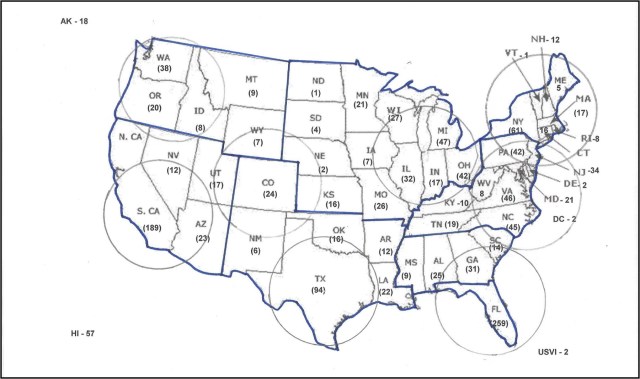
 Why We Built A Diving Industry
 Becoming an Engaged Dive Industry Professional
 Starting Your Own Business Series
 The Dive Industry Trade Directory & Buyers Guide: Sellers of diving equipment, training, travel, and lifestyle products are always looking for new customers. Mainly because of the recent COVID pandemic, many vendors have either cut back, changed their address or gone out of business. This leaves the potential buyer with questions as to who is still in business and how do they reach them? Our Trade Directory & Buyers Guide puts the current names and points of contact of these sellers in the hands of potential buyers, all in one document. The annual price of a listing is $125. Sellers are given one listing in the Trade Directory that includes company name, company contact person, address, phone, fax, email address and website url. The Buyer’s Guide is a cross reference directory for each listing. Each listing is broken down by industry sector, i.e. Manufacturer, Dive Store, Dive Operator, Travel Business, Non-Profit Organization, etc. Diving equipment is broken down further by category of products. Travel Businesses is further broken down by travel category and by country. The Trade Directory is updated monthly and sent to all Dive Industry Professionals free of charge. It is published in Adobe pdf form and as a Flip-Page Magazine. We are working on publishing the Trade Directory on its own website, as we have done in the past.
 Dive Industry Weekly News: Another marketing vehicle that has been a huge benefit to our membership is our Weekly News Press Release Service. Our Members receive 24 free press releases with their annual membership. That is $4,800 worth of free press when compared with our competitor. The Weekly News has a free subscription for all Dive Industry Professionals Worldwide. The News is distributed via direct email using Constant Contact’s email marketing service and is posted to various social media sources. Because we do not charge our members for their press release, our service is shared by numerous social media profiles, pages, and groups. Our goal is to reach every Dive Industry Professional across the globe every single week.
 The Dive Industry Professional Magazine: As if having an International Diving Trade Directory & Buyers Guide and a Weekly News Release was not enough, the global diving community now has a monthly trade magazine dedicated to the working dive professionals worldwide, regardless of their training agency affiliation or their diving equipment brand preference. It’s called The Dive Industry Professional. Our trade magazine has been in existence for 22 years as a monthly newsletter and was recently upgraded to a magazine format in April 2022. The magazine covers issues that are important to working dive professionals. Our typical issue includes an Editorial, an Industry Leader Profile, an Industry Business Profile, a Shows & Events Calendar, DIVE LOCAL Events, and paid advertisements. We publish articles on business topics as well as articles on diving destinations, dive operators, and FAM Trips. One of our favorite columns is the Outstanding Divemaster Award series. Subscriptions are free to all Dive Industry Professionals worldwide. As the magazine grows in readership, we are looking to add stories of interest from our readers and guest authors.
 Dive Industry Association, Inc.